Customer Support : 020-61923200, [email protected] | Call and Trade : 020-61923220

MACD Histogram
#momentum
Inventor: Thomas Aspray
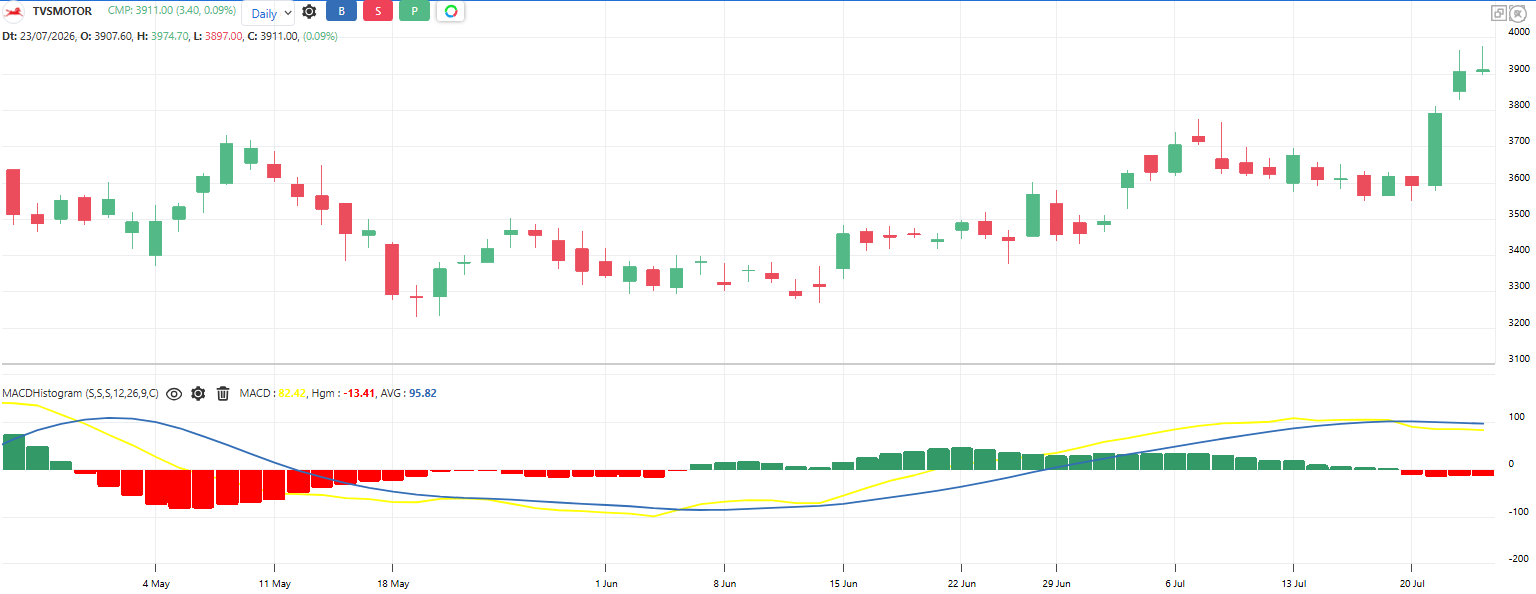
The bars behind the MACD: it plots the gap between the MACD line and its signal line. It answers one question earlier than MACD itself: is momentum speeding up or slowing down? The histogram peaks and turns before the MACD lines cross, making it the early-warning layer of the MACD family. Also one half of the Elder Impulse System.
Default period: 12, 26, 9 (from MACD settings)
Bars above zero indicate MACD above its signal, bullish phase. Bars below zero indicate bearish phase.
Growing bars mean momentum accelerating; shrinking bars mean it is fading.
Useful readings:
Bars cross above zero: MACD crossed its signal, momentum turned up
Positive bars growing: Uptrend accelerating, hold
Positive bars shrinking: Uptrend decelerating, the earliest caution sign
Tallest bar of the move usually forms well before the price top
Price makes new high but histogram peak is much lower: Strong bearish divergence
Slope of the bars (rising or falling) matters more than their absolute size
Objective rules:
Bullish: Histogram crosses above zero.
Bearish: Histogram crosses below zero.
Early exit long: Histogram shrinks for 3 consecutive bars after a strong peak
Divergence rule: Price at new high but histogram peak below the previous peak, tighten stops
Impulse pairing: Histogram rising AND 13 EMA rising = buy permission (Elder Impulse green)
What makes it unique:
Aspray built it to front-run the MACD crossover, and its slope still turns before the lines cross. It is the earliest listener in the entire MACD family.
Click here to learn more about MACD line.
The indicator table value in TradePoint & RZone also provides you with a list of all values of this indicator for any group of stocks. This will allow you to compare the readings of this indicator across different stocks.
This indicator is also available in the System Builder of RZone & TradePoint for all charting methods. Using the system builder, you can develop various strategies based on the different conditions already present in this indicator. Additionally, it can be used with other indicators or price patterns to develop effective trading strategies. For any group of stocks and market segments, you can scan and backtest stocks based on those strategies.
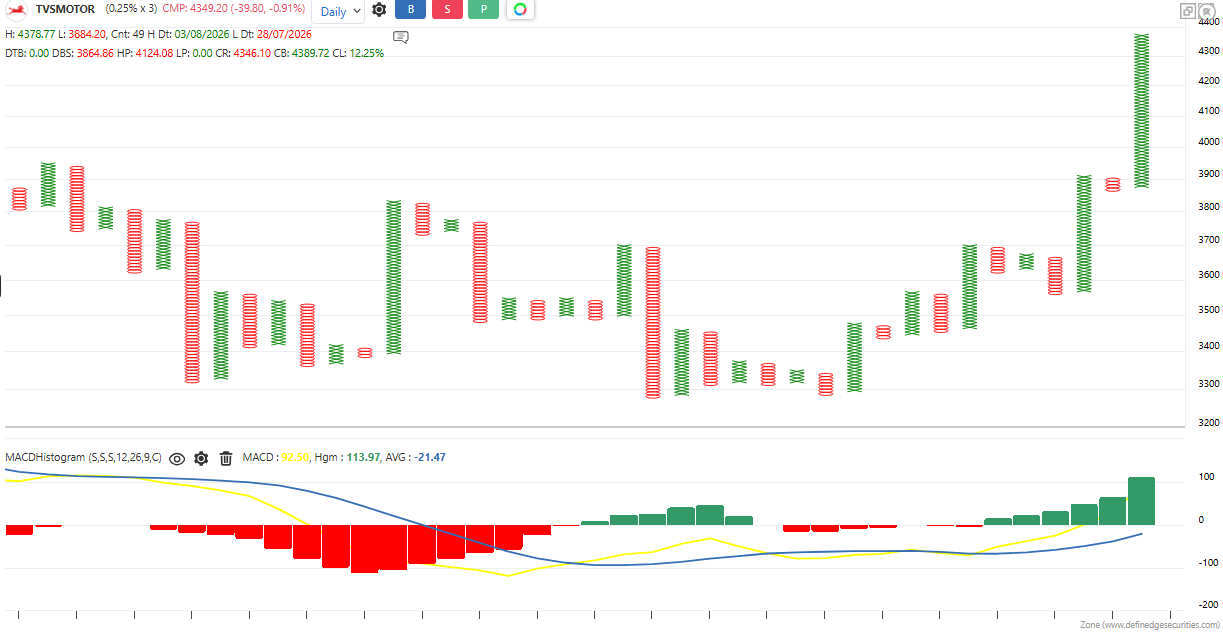
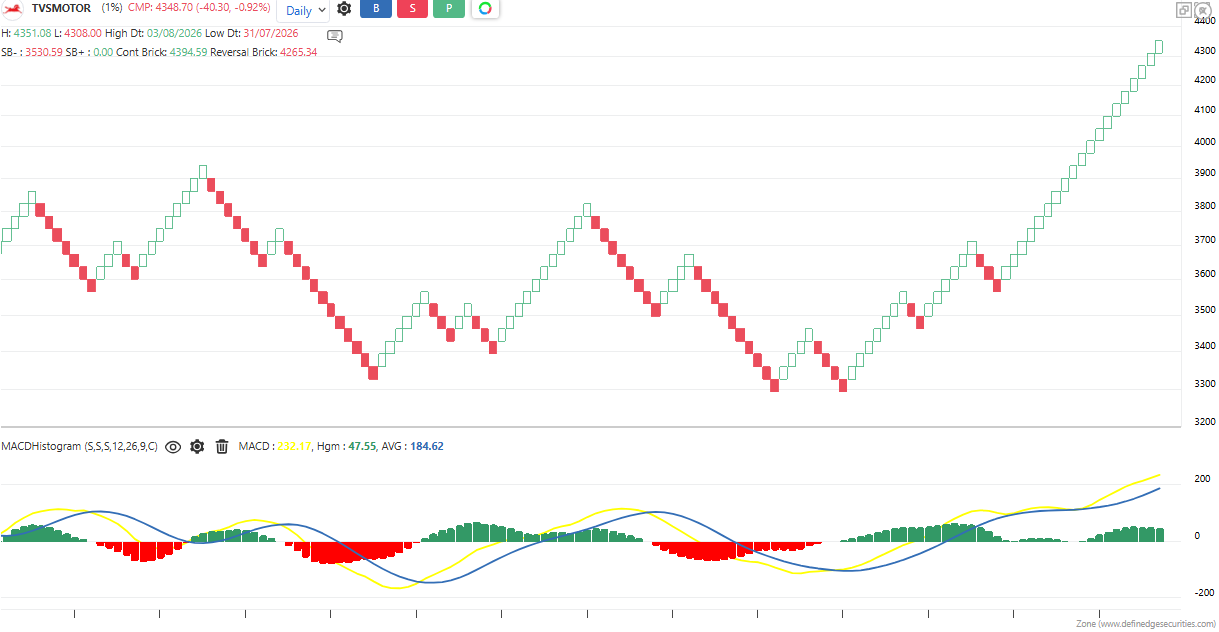
The indicator is applicable to all types of charting. Calculated based on the number of columns on P&F charts, bricks on Renko charts, lines on Line-break charts, candles on Heikin ashi charts, and lines on Kagi charts. While the formula and reading of the indicators remain the same, they become more dynamic on these charts.