Customer Support : 020-61923200, [email protected] | Call and Trade : 020-61923220

RDX
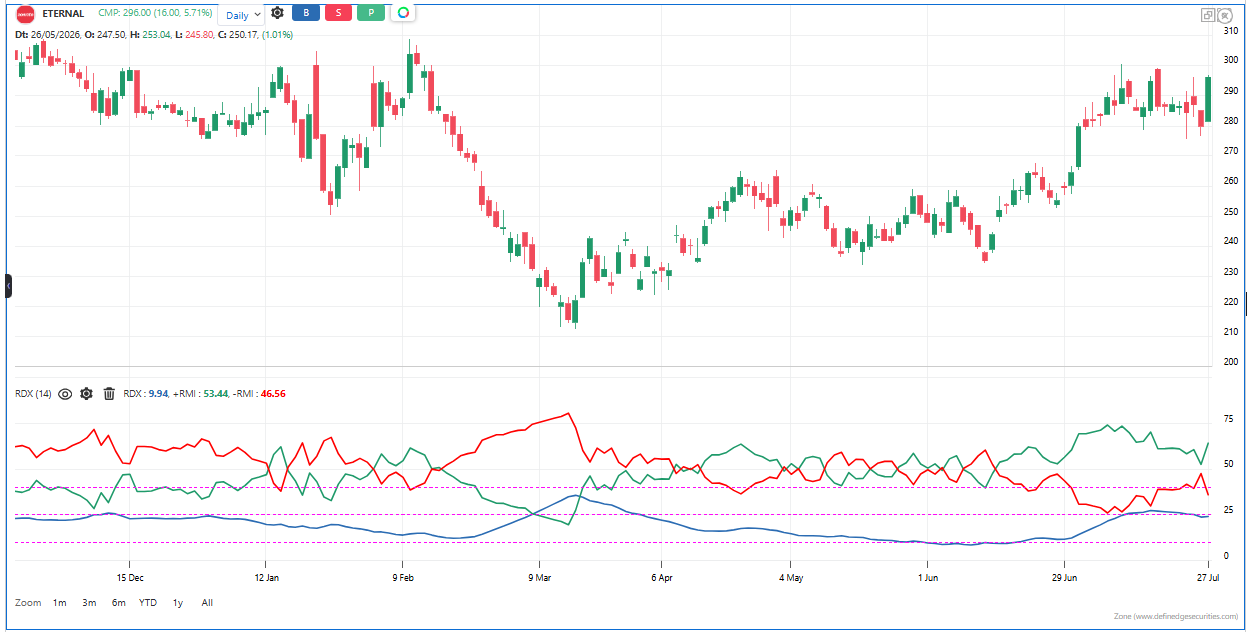
Creator: Definedge
#volatility #risk #momentum #balance
RDX (Risk Index) measures how one-sided the market action is. It doesn’t tell you whether price is going up or down — it tells you whether one side is completely dominating or whether both sides are evenly matched. High RDX means the market is heavily one-sided. Low RDX means the market is balanced.
Default period: 14
Line behavior: RDX ranges from 0 to 100. Near 0 means gains and losses are equal — the market is balanced. Near 100 means one side completely dominates. A smoothed line runs with it to show the underlying trend in risk.
Useful readings:
– RDX near 0 — the market is in equilibrium. Expect consolidation.
– RDX rising — one side is taking control. Directional risk is increasing.
– RDX above its smoothed line — risk is accelerating.
– RDX below its smoothed line — risk is moderating.
– Very high RDX (80-100) — the market is extremely one-sided. Strong conviction, but also potential exhaustion.
– RDX falling from highs — the dominant side is losing control. Trend may be tiring.
Objective rules:
– Watch for RDX rising from near-zero — this signals the start of directional risk and a potential new trend.
– When RDX is high and rising, the trend has strong conviction — ride it.
– When RDX peaks and starts falling, tighten stops — the move is losing steam.
– When RDX returns to near zero, expect consolidation or a new direction.
– Avoid entering when RDX is at extreme highs — the move may be overextended.
What makes it unique: RDX doesn’t predict direction — it measures imbalance. In a strong trend, high RDX isn’t danger; it’s conviction. It’s a pure gauge of how one-sided the action is, making it a powerful companion to any trend strategy.
The indicator table value in TradePoint & RZone also provides you with a list of all values of this indicator for any group of stocks. This will allow you to compare the readings of this indicator across different stocks.
This indicator is also available in the System Builder on RZone & TradePoint for all charting methods. Using the system builder, you can develop various strategies based on the different conditions already present in this indicator. Additionally, it can be used with other indicators or price patterns to develop effective trading strategies. For any group of stocks and market segments, you can scan and backtest stocks based on those strategies.
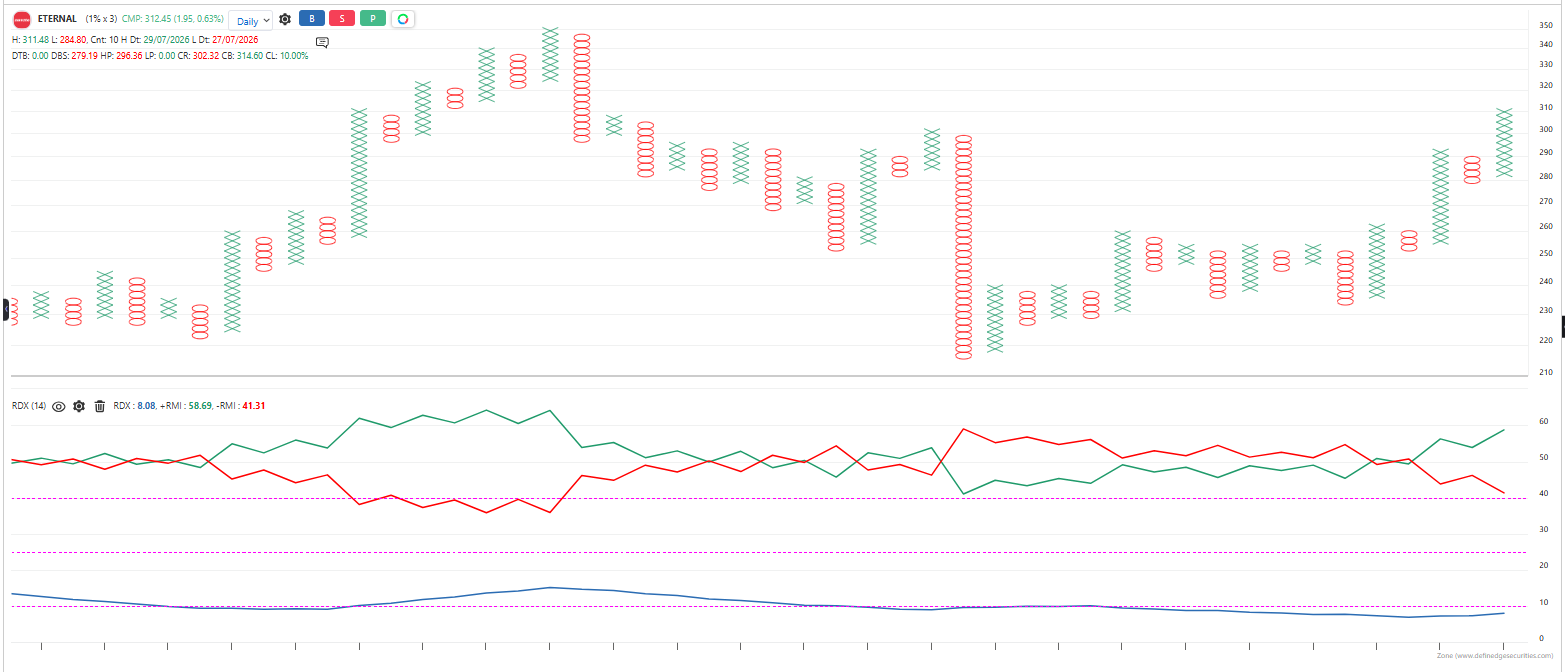
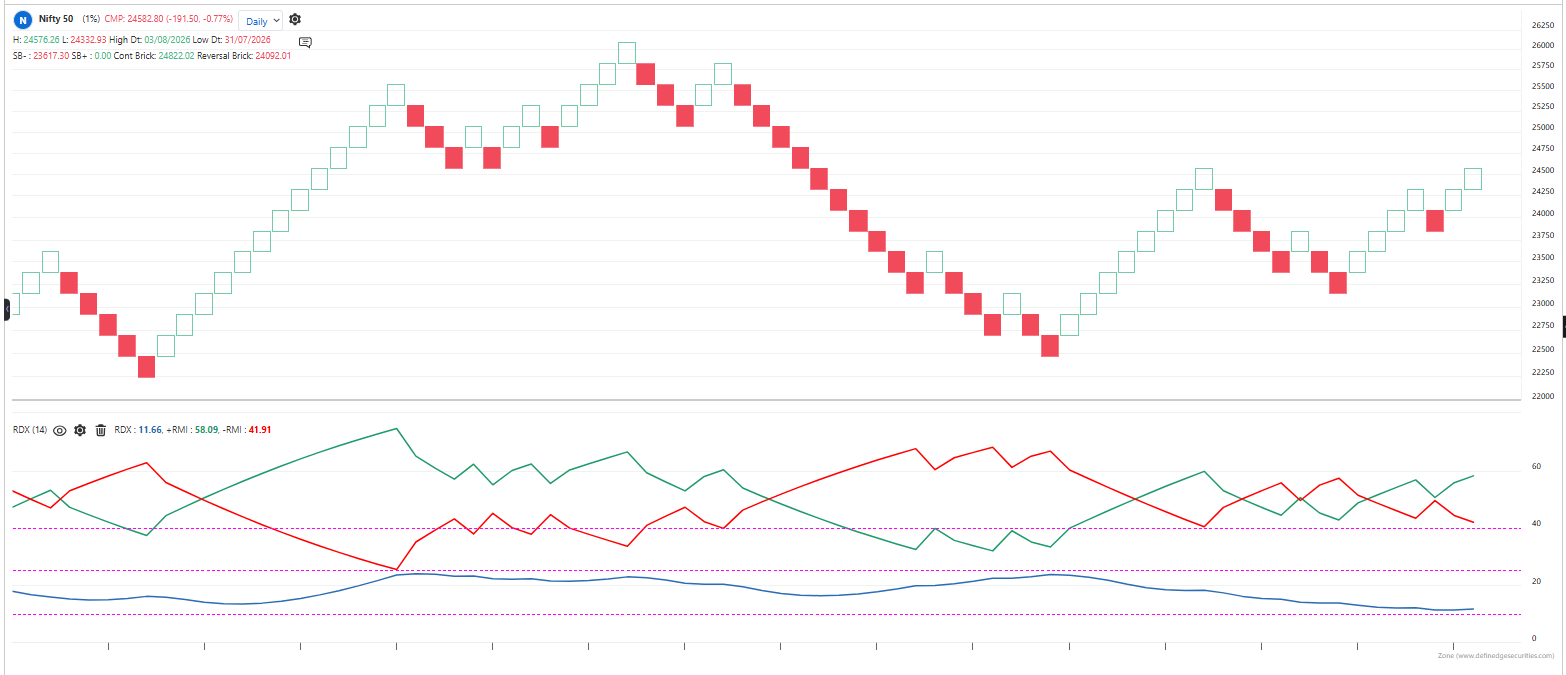
The indicator is applicable to all types of charting. It is calculated based on the number of columns on P&F charts, bricks on Renko charts, lines on Line-break charts, candles on Heikin-Ashi charts, and lines on Kagi charts. While the formula and reading of the indicators remain the same, they become more dynamic on these charts.