Customer Support : 020-61923200, [email protected] | Call and Trade : 020-61923220

Alligator
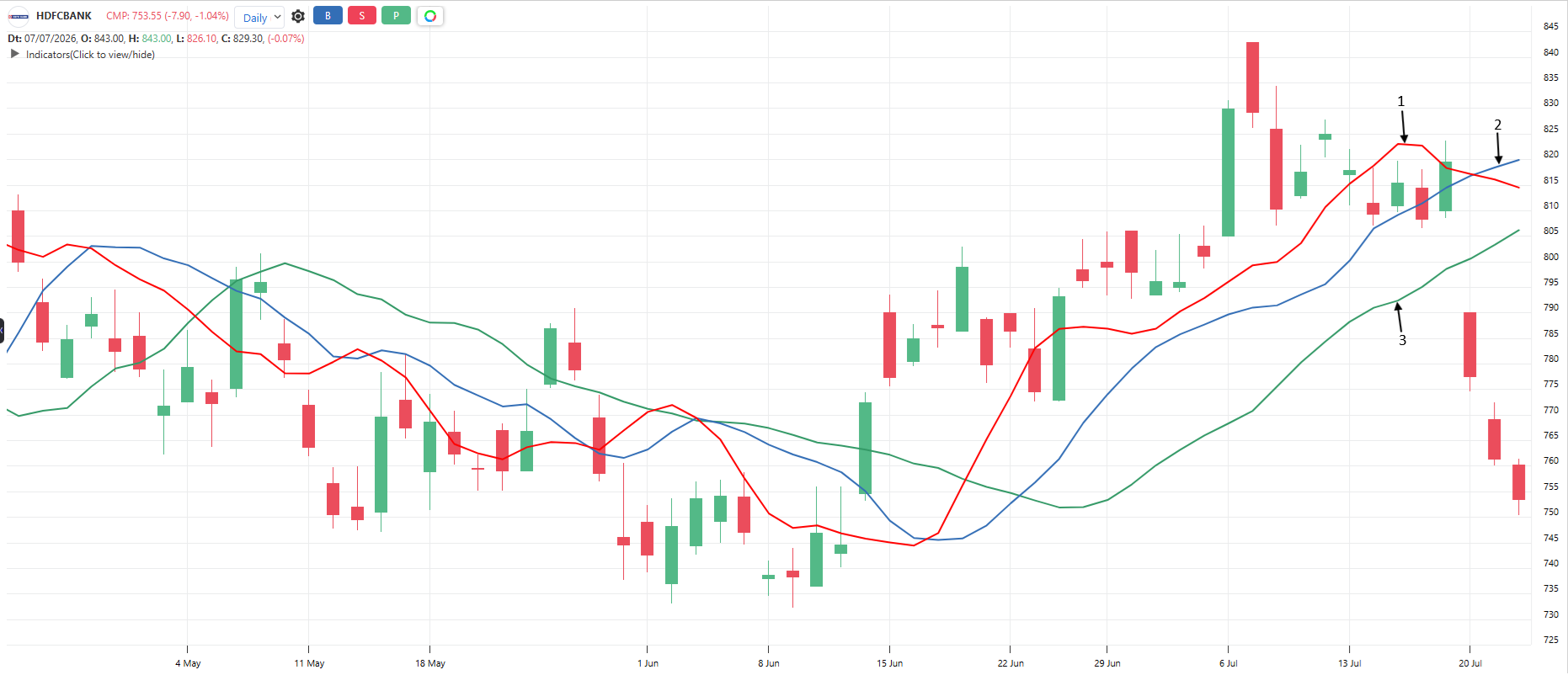
#trendfollowing #movingaverage
Inventor: Bill Williams
Three smoothed moving averages plotted forward in time, called the Jaw (13, blue), Teeth (8, red) and Lips (5, green). When the three lines are twisted together the alligator is sleeping (sideways market). When they open up and spread apart, the alligator is eating (trending market).
Default period: 13/8, 8/5, 5/3 (period/forward shift for Jaw, Teeth, Lips)
Lines spread apart and rising indicates uptrend. Lines spread apart and falling indicates downtrend. Lines tangled together indicates sideways market.
Useful readings:
Lips above Teeth above Jaw: Bullish order, uptrend on
Lips below Teeth below Jaw: Bearish order, downtrend on
Lines tangled for many bars: Alligator sleeping, breakout building, stay out
Lines opening wider: Trend getting stronger, hold the trade
Lips crossing back into Teeth: Trend tiring, first warning
Longer the sleep, bigger the move that usually follows
Objective rules:
Bullish: Lips cross above Teeth and Jaw, and price closes above all three lines.
Bearish: Lips cross below Teeth and Jaw, and price closes below all three lines.
Long exit: Price closes below the Teeth (red line)
Short exit: Price closes above the Teeth (red line)
Sleep filter: Skip signals while all three lines are within a narrow band of each other
What makes it unique:
It turns three moving averages into a story – sleeping, waking, eating – that makes trend phases intuitive. The forward shift of its lines builds in a natural confirmation delay.
The indicator table value in TradePoint & RZone also provides you with a list of all values of this indicator for any group of stocks. This will allow you to compare the readings of this indicator across different stocks.
This indicator is available in the System Builder on RZone & TradePoint for all charting methods. Using the system builder, you can develop various strategies based on the different conditions already present in this indicator. Additionally, it can be used with other indicators or price patterns to develop effective trading strategies. For any group of stocks and market segments, you can scan and backtest stocks based on those strategies.
Click here to learn more about the indicator.
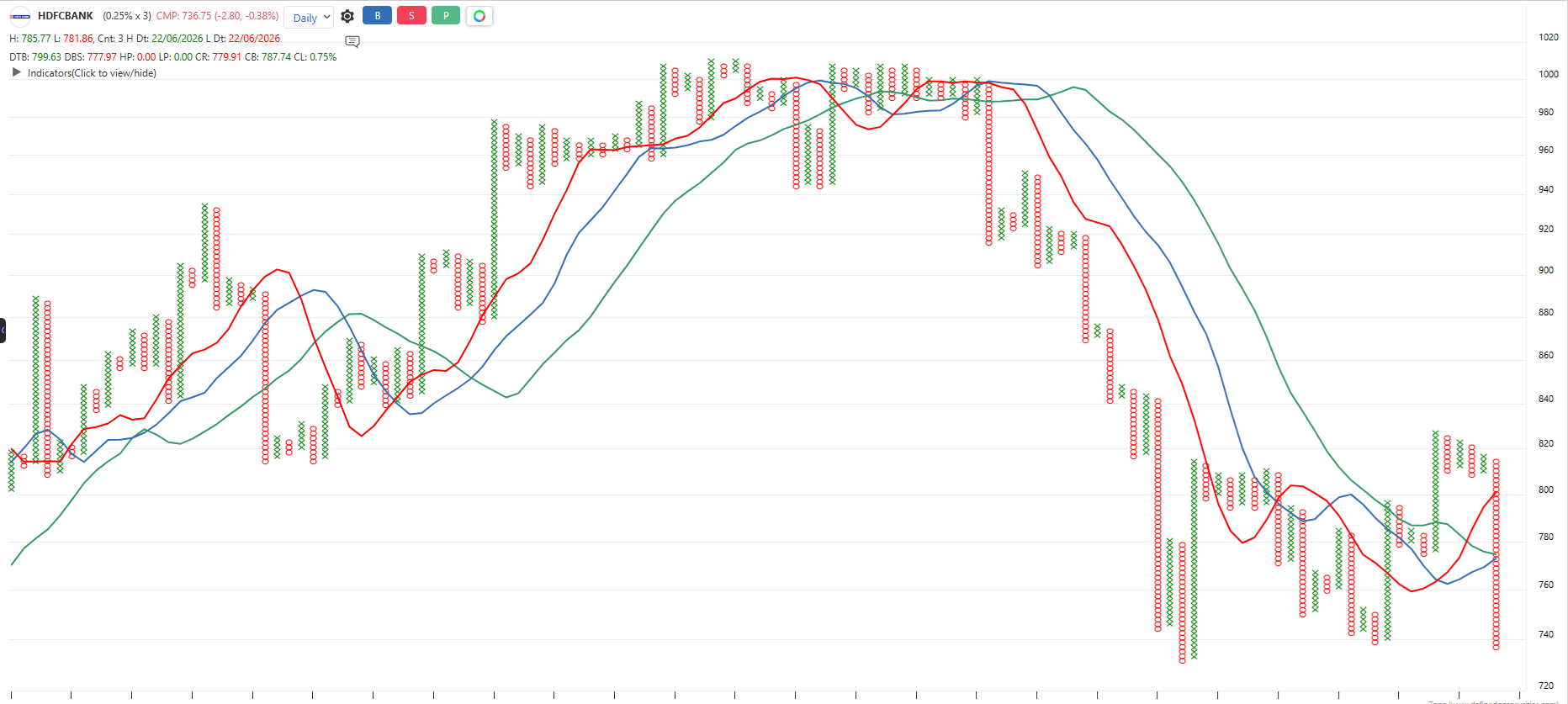
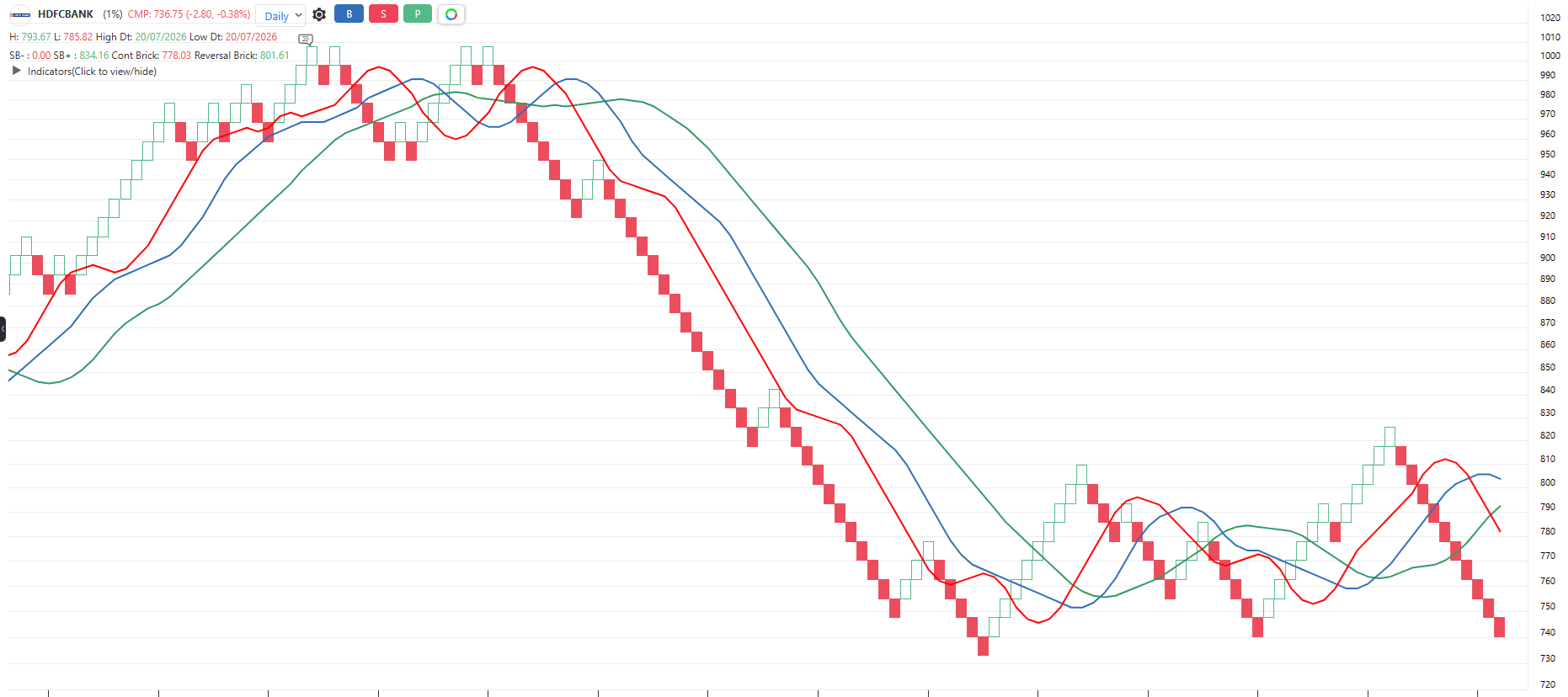
The indicator is applicable to all types of charting. It is calculated based on the number of columns on P&F charts, bricks on Renko charts, lines on Line-break charts, candles on Heikin-Ashi charts,
and lines on Kagi charts. While the formula and reading of the indicators remain the same, they become more dynamic on these charts.