Customer Support : 020-61923200, [email protected] | Call and Trade : 020-61923220

Gain Loss Count Indicator
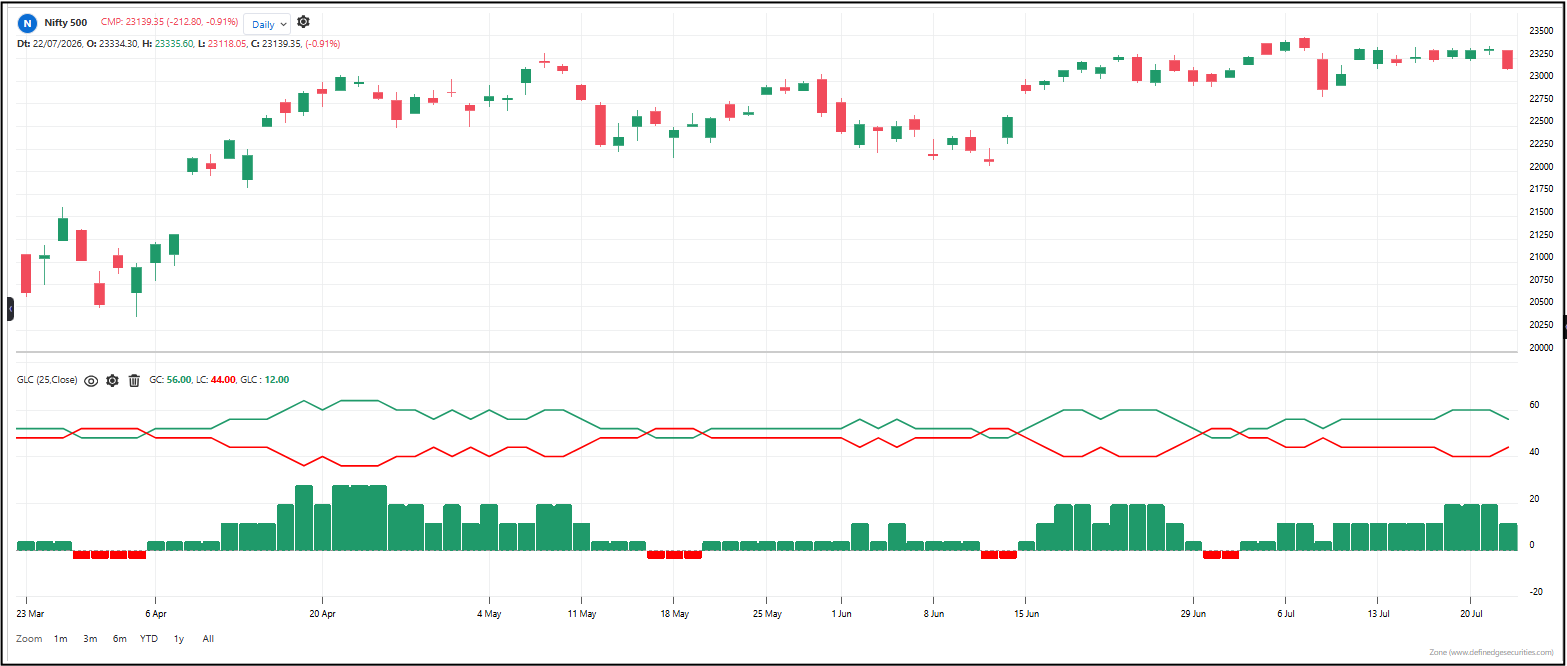
#momentum #session-count #bullbear #ratio #simple
The Gain-Loss Indicator measures short-term bullish versus bearish pressure by simply counting how many days price closed higher versus how many days it closed lower over a fixed window. It then converts those counts into percentages and subtracts the bearish percentage from the bullish percentage. The result is a clean, easy-to-read line that shows which side is winning day to day.
Default period: 25
Line behavior:
Oscillates between -100 and +100. A reading of +100 means every day in the lookback period was an up day. A reading of -100 means every day was a down day. A reading near 0 means up and down days are roughly equal, indicating a balanced or choppy market.
Useful readings:
– Above 0: More up days than down days — bullish session dominance
– Below 0: More down days than up days — bearish session dominance
– Above +50: Strong bullish session control (majority of days are up)
– Below -50: Strong bearish session control (majority of days are down)
– Near 0: Market is directionless or consolidating
– Crossing 0 up/down: Shift in daily session momentum
Objective rules:
– Buy when the indicator crosses above 0 from below
– Sell when the indicator crosses below 0 from above
– Strongest signals occur when the reading moves beyond +50 (bullish) or below -50 (bearish)
– Readings near 0 suggest staying out or waiting for clearer direction
– Divergence between price making new highs/lows and the indicator failing to confirm warns of weakening momentum
The indicator table value in TradePoint & RZone also provides you with a list of all values of this indicator for any group of stocks. This will allow you to compare the readings of this indicator across different stocks.
This indicator is also available in the System Builder of RZone & TradePoint for all charting methods. Using the system builder, you can develop various strategies based on the different conditions already present in this indicator. Additionally, it can be used with other indicators or price patterns to develop effective trading strategies. For any group of stocks and market segments, you can scan and backtest stocks based on those strategies.
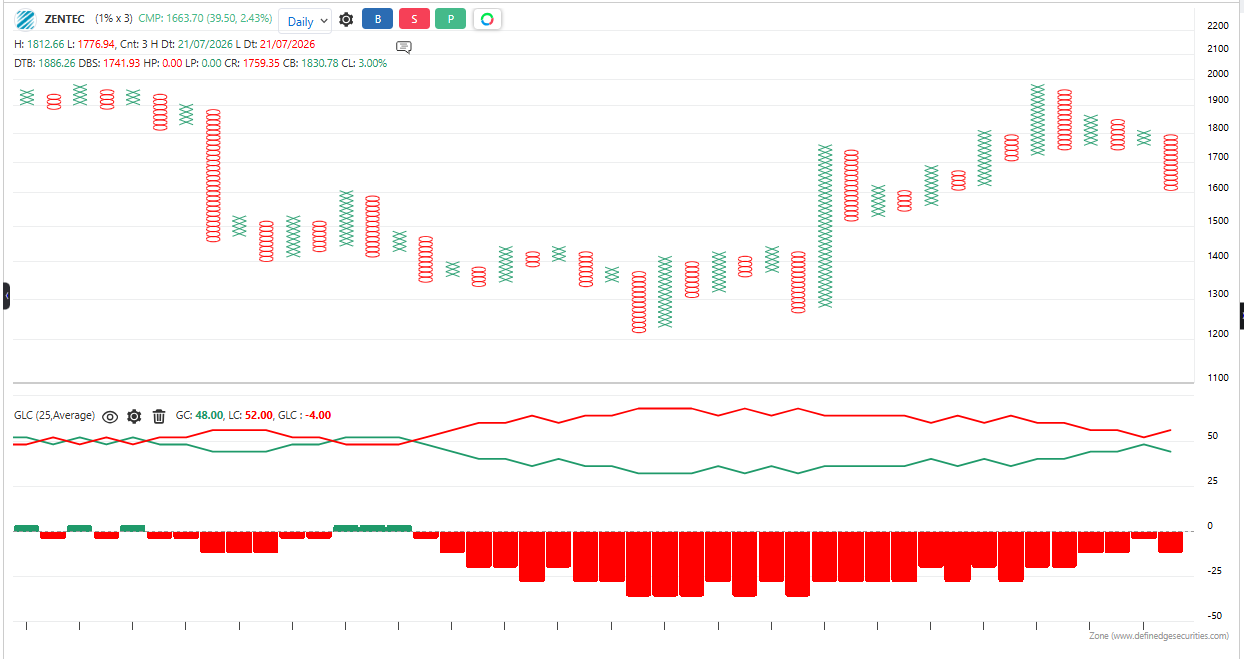
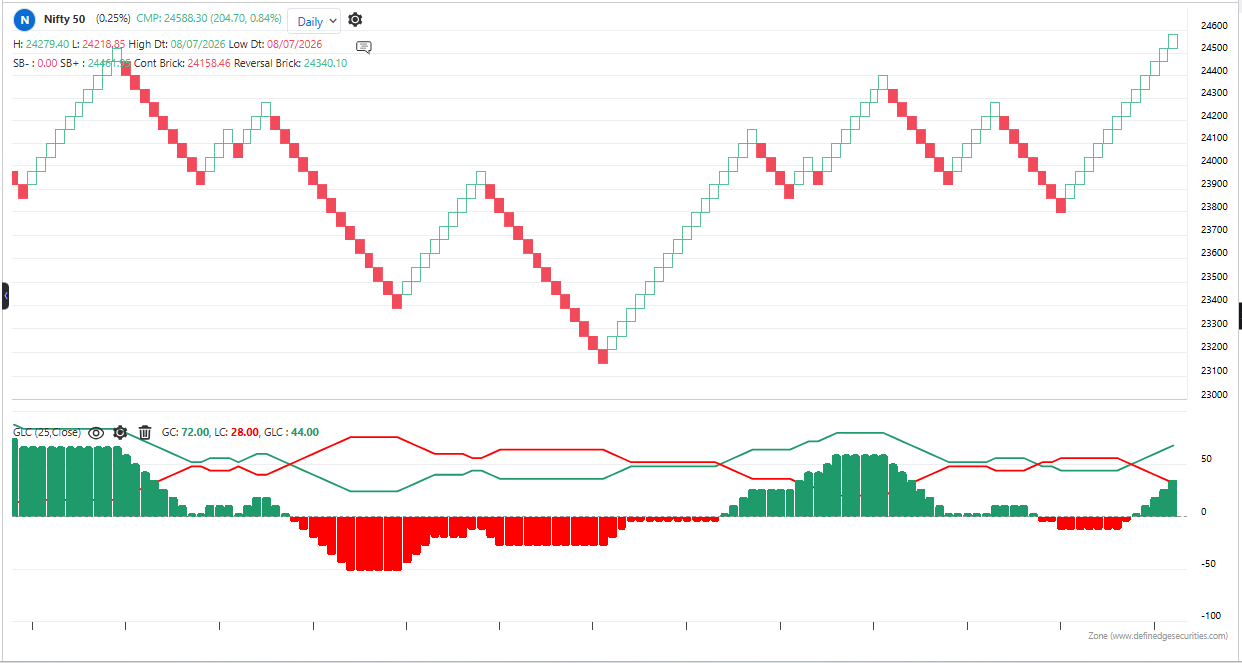
The indicator is applicable to all types of charting. Calculated based on the number of columns on P&F charts, bricks on Renko charts, lines on Line-break charts, candles on Heikin ashi charts, and lines on Kagi charts. While the formula and reading of the indicators remain the same, they become more dynamic on these charts.