Customer Support : 020-61923200, [email protected] | Call and Trade : 020-61923220

KST – Know Sure Thing Indicator
#momentum #longterm
Inventor: Martin Pring
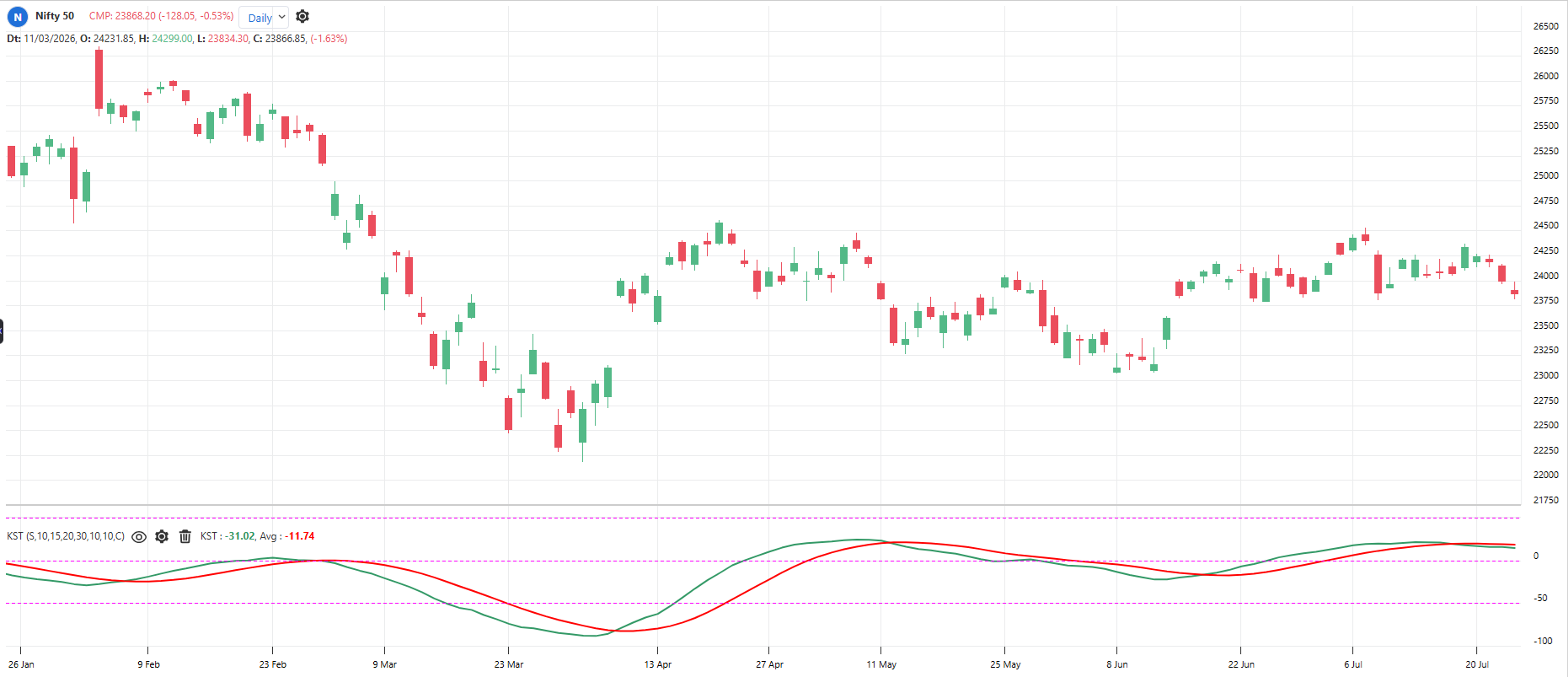
Created by Martin Pring. It blends four rates of change of different lengths, smooths each, and adds them with more weight on the longer ones. The result is one smooth momentum line that captures short, medium and long price cycles together. Plotted with a 9-period signal line.
Default period: ROC 10, 15, 20, 30 smoothed by 10 ; signal 10
Line above zero indicates the bigger momentum tide is up. Line below zero indicates it is down.
Useful readings:
KST crosses above signal line: Momentum turning up
KST crosses below signal line: Momentum turning down
KST above zero and rising: Bull phase healthy
KST below zero and falling: Bear phase healthy
KST flattens at a high: Long rally tiring, caution
Price at new high but KST lower: Bearish divergence with strong record on weekly charts
Slower but steadier than MACD; suited to positional trading
Objective rules:
Bullish: KST crosses above its signal line.
Bearish: KST crosses below its signal line.
Strong bullish setup: KST crosses above signal AND both are above zero
Strong bearish setup: KST crosses below signal AND both are below zero
Positional rule: On weekly charts, stay long while KST is above its signal line
What makes it unique:
It listens to four momentum cycles at once, weighted toward the slow ones, where single-ROC tools hear only one. Pring built it to keep positional traders on the right side of the primary tide. As opposed to the RSI Momentum Oscillator, the KST indicator has no upper or lower extremes.
The indicator table value in TradePoint & RZone also provides you with a list of all values of this indicator for any group of stocks. This will allow you to compare the readings of this indicator across different stocks.
This indicator is also available in the System Builder on RZone & TradePoint for all charting methods. Using the system builder, you can develop various strategies based on the different conditions already present in this indicator. Additionally, it can be used with other indicators or price patterns to develop effective trading strategies. For any group of stocks and market segments, you can scan and backtest stocks based on those strategies.
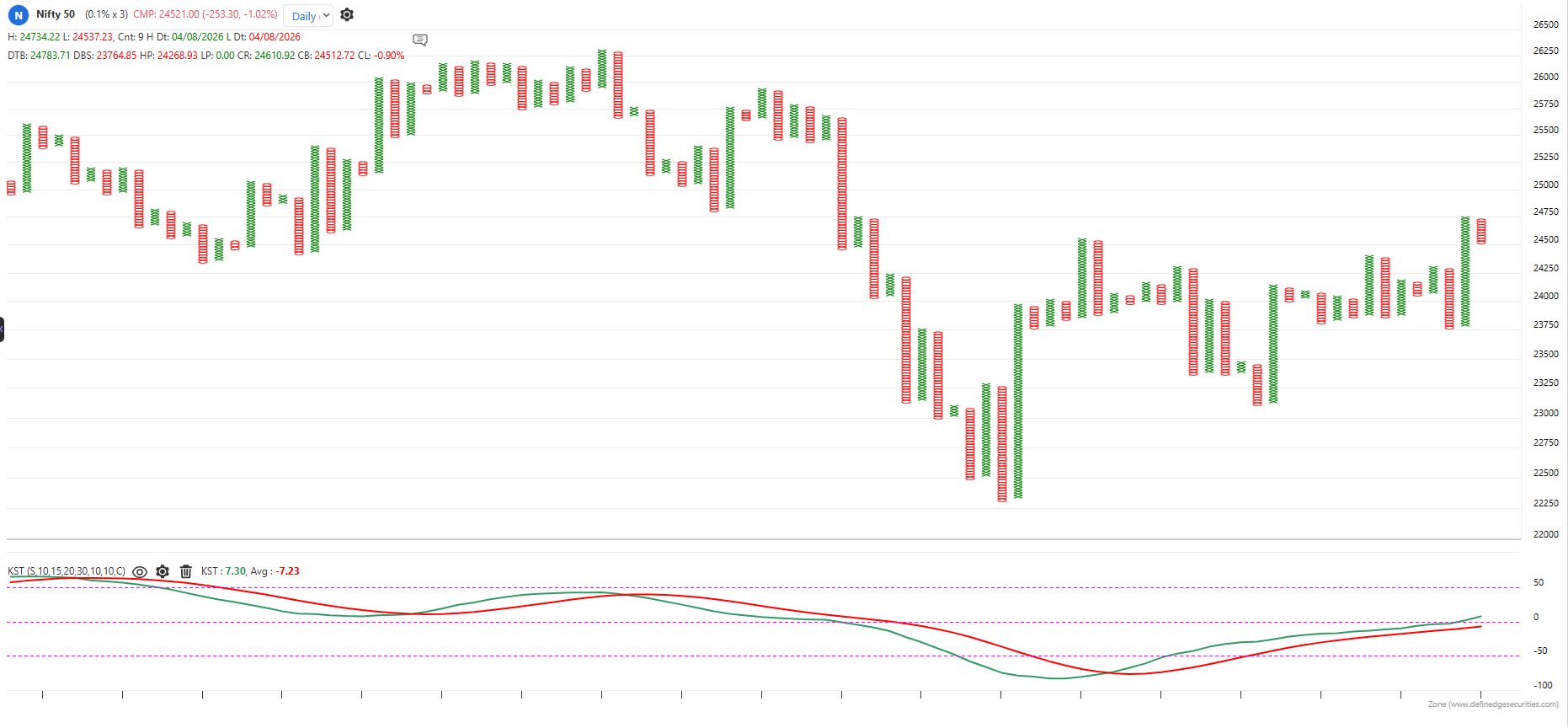
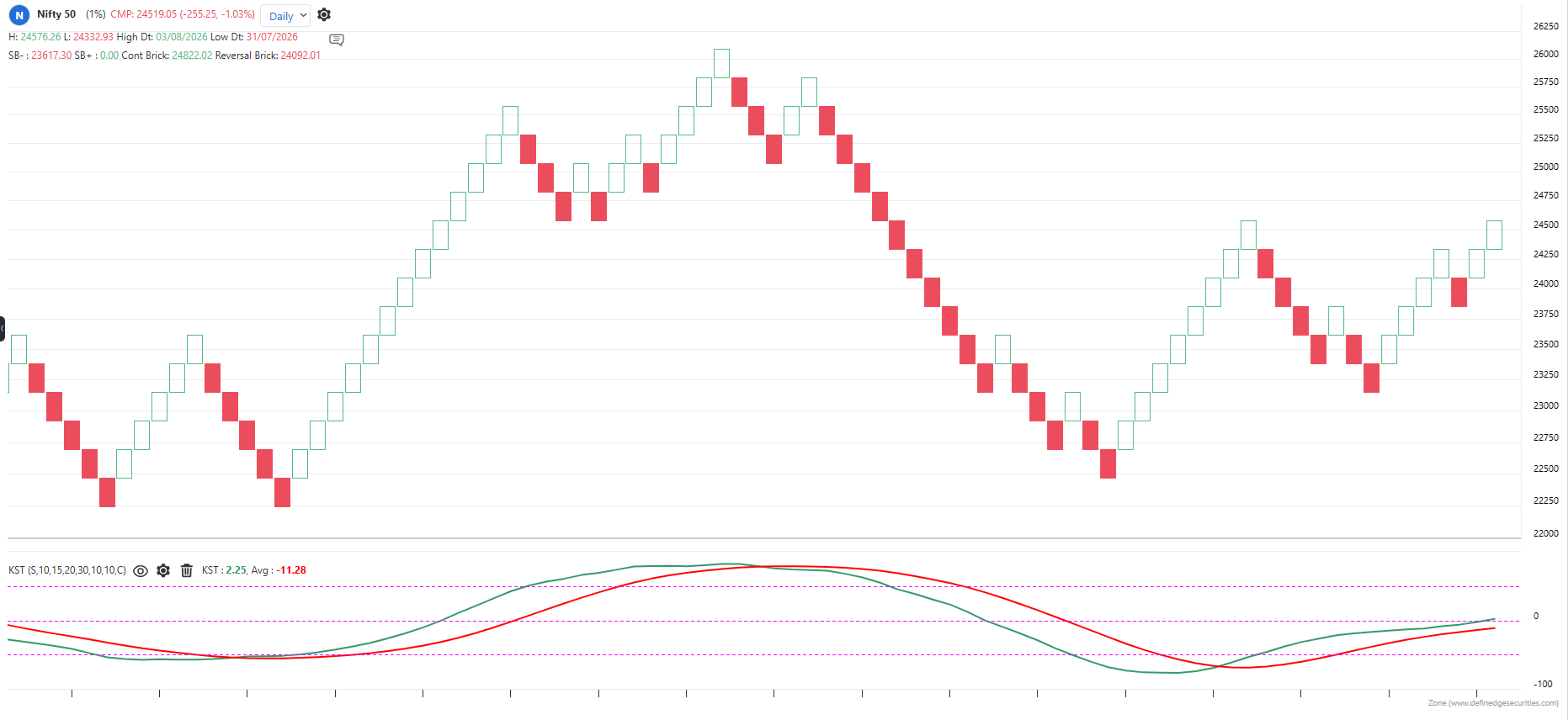 The indicator is applicable to all types of charting. It is calculated based on the number of columns on P&F charts, bricks on Renko charts, lines on Line-break charts, candles on Heikin-Ashi charts, and lines on Kagi charts. While the formula and reading of the indicators remain the same, they become more dynamic on these charts.