Customer Support : 020-61923200, [email protected] | Call and Trade : 020-61923220

Bollinger BTV Indicator
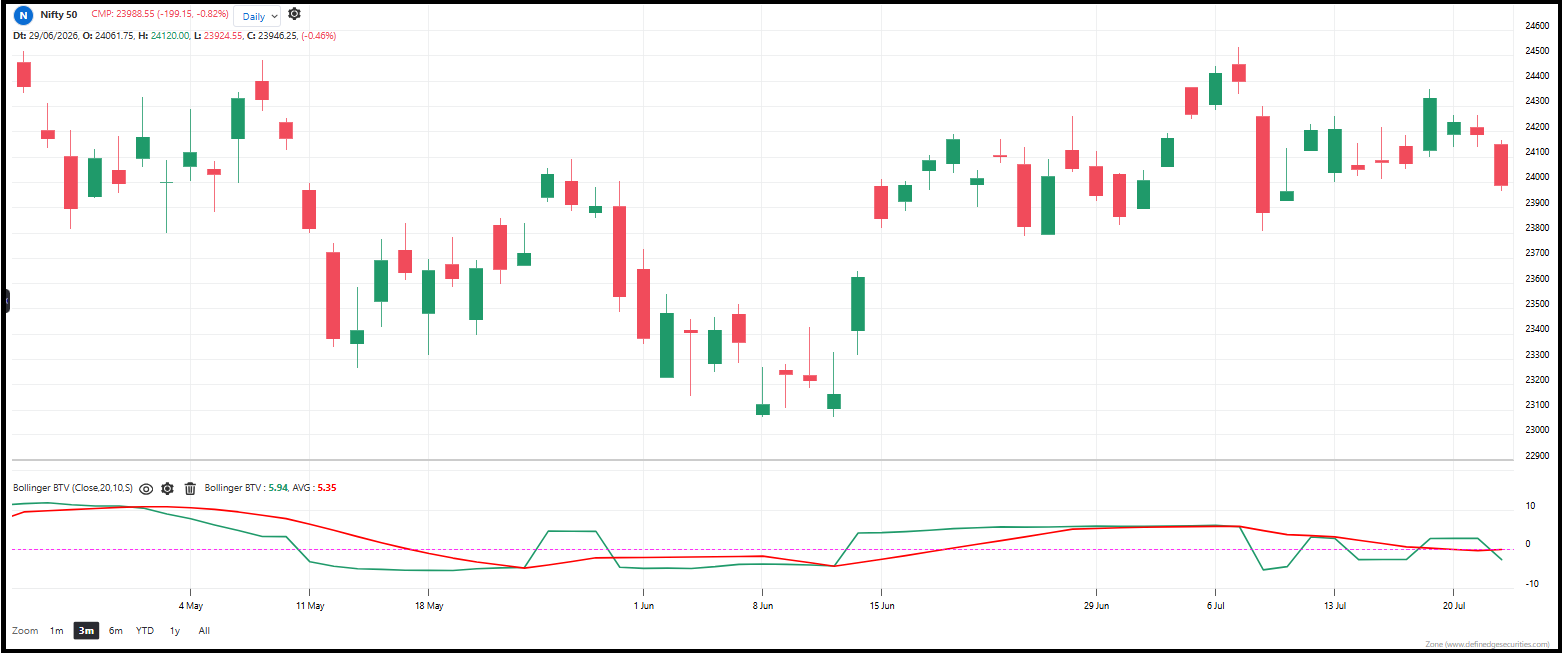
#volatility #bandwidth #bands
This indicator measures how wide or narrow the price bands are relative to where the price is trading. Think of it as a volatility thermometer—it tells you whether the market is in a compressed, quiet phase or an expanded, active phase. The BBTV line goes positive when price is riding the upper side of its bands and negative when it’s on the lower side. The average line smooths out the noise so you can see the broader volatility trend.
Default period: 20 days
Line behavior: Oscillates above and below zero with a smoothing average line.
Useful readings: When BBTV is near zero, volatility is low and a big move may be coming. When BBTV spikes, volatility is already expanded. Positive readings mean price is strong relative to its range; negative means it’s weak.
Objective rules:
– BBTV crosses above its average line = volatility expanding on the bullish side
– BBTV crosses below its average line = volatility expanding on the bearish side
– BBTV near zero = compression phase, prepare for a breakout
– Average line above zero = sustained strength; below zero = sustained weakness
The indicator table value in TradePoint & RZone also provides you with a list of all values of this indicator for any group of stocks. This will allow you to compare the readings of this indicator across different stocks.
This indicator is also available in the System Builder of RZone & TradePoint for all charting methods. Using the system builder, you can develop various strategies based on the different conditions already present in this indicator. Additionally, it can be used with other indicators or price patterns to develop effective trading strategies. For any group of stocks and market segments, you can scan and backtest stocks based on those strategies.
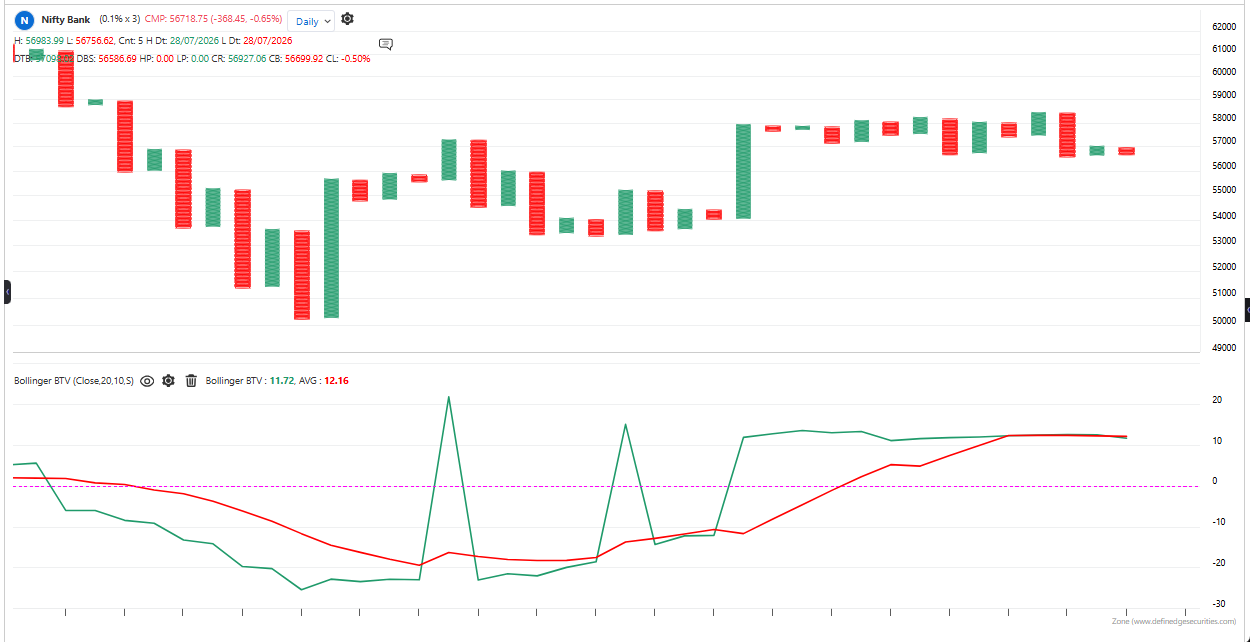
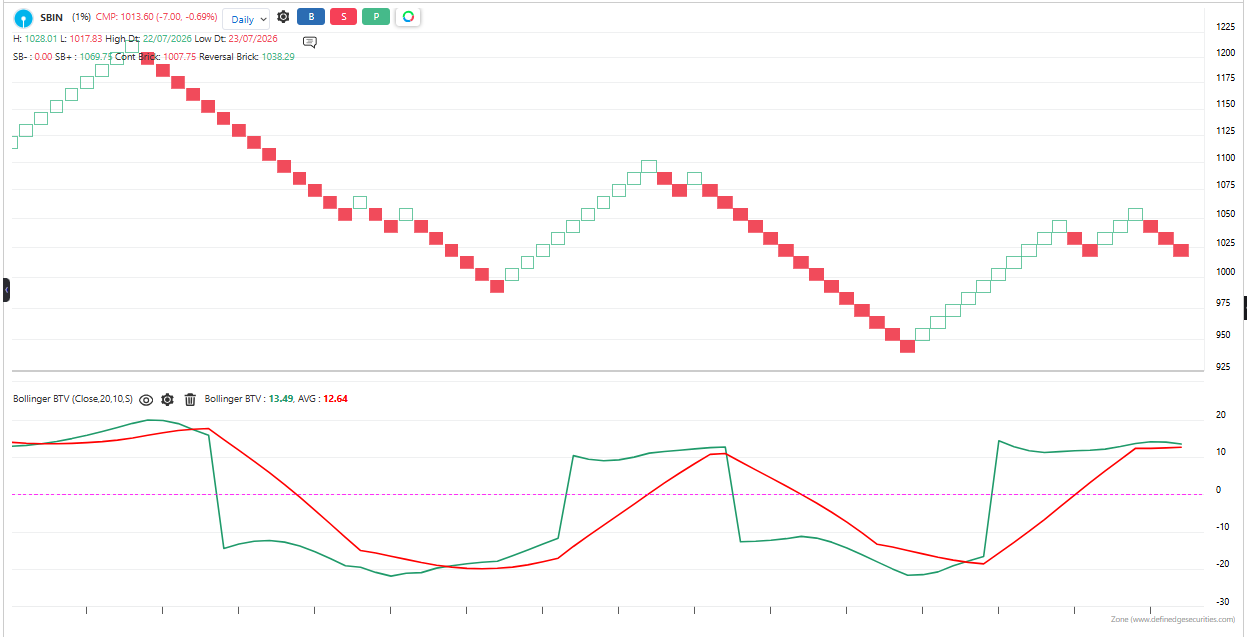
The indicator is applicable to all types of charting. Calculated based on the number of columns on P&F charts, bricks on Renko charts, lines on Line-break charts, candles on Heikin ashi charts, and lines on Kagi charts. While the formula and reading of the indicators remain the same, they become more dynamic on these charts.