Published on: January 7, 2026

There’s a familiar pattern you’ve probably noticed.
A stock starts moving. 5%. Then 10%. Then 20%.
You notice it. You even say it out loud: “This has momentum.”
But then the real question is, “What do you do with it now?”
Buy and risk being late? Wait and risk missing it entirely?
This is where momentum investing might feel exhausting and confusing, especially when one does not have a clearly defined strategy.
Momentum works. That’s not the debate.
Stocks in a momentum phase tend to stay in momentum until there’s evidence they don’t.
You’ve seen it play out:
- Strong stocks keep making higher highs
- Weak stocks keep dropping to fresh lows
- Trends persist longer than logic feels comfortable with
This is why momentum investing exists in the first place. But momentum isn’t a guarantee.
Momentum crashes do happen, and when they do, they’re fast and sharp.
This is the point where most traders freeze and lose confidence in momentum as a trading or investing factor.
The real problem isn’t momentum. It’s decision fatigue.
Every day you hold a momentum stock, you’re silently grappling with questions such as:
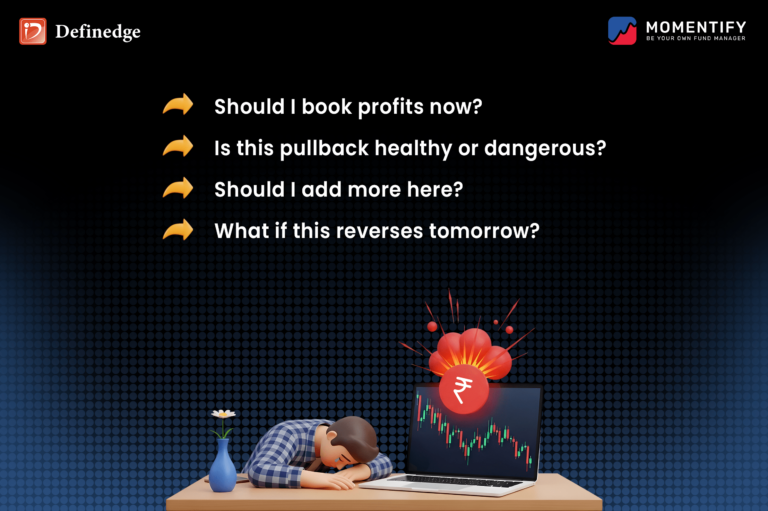
These are familiar questions triggered by basic human emotions of fear, greed, regret, and hope.
And slowly, investing becomes more stressful than strategic.
This is why many traders underperform the very strategies they believe in
What actually separates consistent traders from stuck ones
It’s rarely about intelligence, experience, or even prediction skills.
Most traders who struggle aren’t lacking knowledge. They’re stuck making too many decisions, too often, under uncertainty. And most importantly, most traders lack the consistency and discipline to stick to a strategy for a prolonged period of time to reap its benefits.
What actually makes the difference is a rule-based, backtested process.
Rules that can address the questions before emotions get involved:
- Which stocks qualify?
- When do you enter?
- When do you exit?
- How often do you rebalance?
- How has this behaved historically?
With these rules in place, the strategy runs on structure rather than judgment.
You’re not trying to outthink the market each day. You’re instead following a process that’s already been tested across diverse conditions.
A backtest worth paying attention to
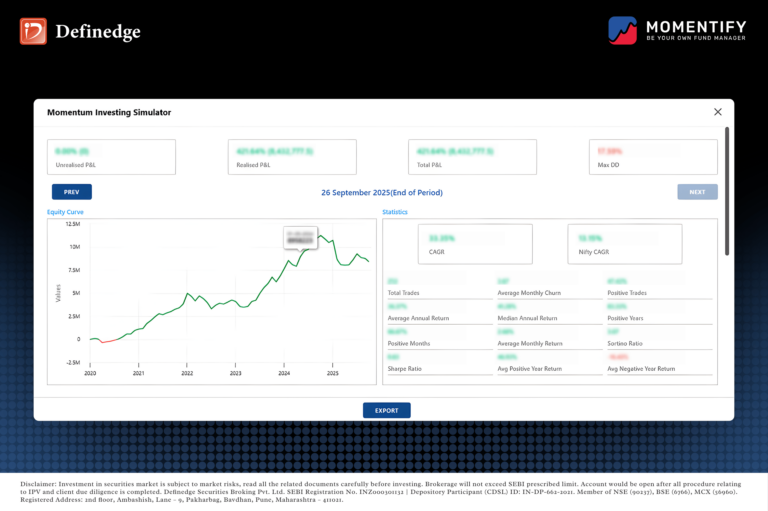
We ran a simple, systematic momentum strategy that outperformed the Nifty 500 Index from January 2020 to September 2025
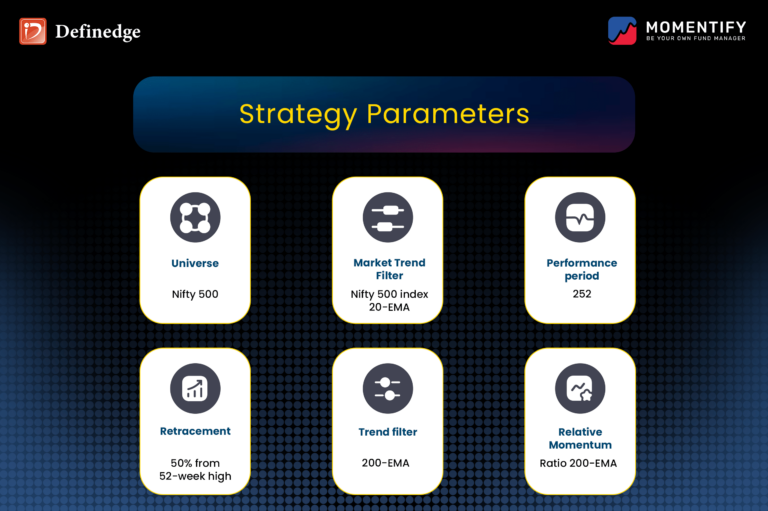
Pause on that timeframe for a moment.
The backtest period includes:
- The dot-com bubble crash in early 2000
- The crash triggered by the global financial crisis in 2008
- The COVID crash (March 2020)
- The sharp recovery that followed
- Multiple corrections and volatile phases in between
And through all of it, this rule-based momentum strategy stayed ahead of Nifty 500.
These results came from sticking to the strategy with discipline through rallies, corrections, and volatile phases.
The strategy behind the results
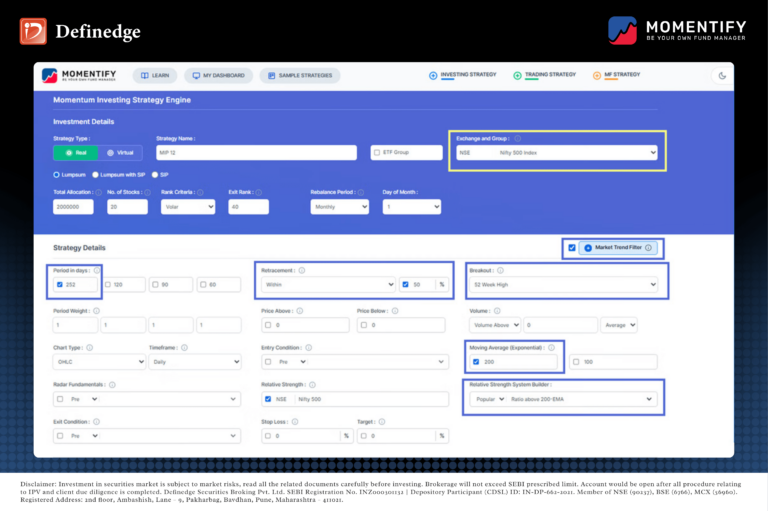
As discussed in the previous post, the backtest shared there was generated using a pre-built strategy called MI Strategy (MIP-12) on Definedge Momentify
Backtest period: 1 January 2020 to 26 September 2025
The strategy uses clearly defined momentum rules to:
- Rank stocks
- Select portfolio constituents
- Rebalance at set intervals
We’ll break down these components individually in upcoming posts.
For now, the key takeaway is simple: You don’t need to invent a momentum strategy from scratch to benefit from one.
Where Momentify fits in
Momentify exists for traders and investors who believe in rules but don’t want complexity./p>
It allows you to:
- Access pre-built, backtested momentum strategies
- Build and backtest your own strategy based on any charting method
- View complete equity curves and drawdowns of the chosen strategy
- Understand how strategies behaved across market cycles
- Tweak parameters if you want or stick to proven defaults
You just have to rely on transparent logic and performance data.
Momentify does the heavy lifting: stock qualification, ranking, signals, and rebalancing. So, you can focus on following the process instead of fighting yourself.

The psychological shift that matters
Moving from discretionary to systematic trading changes your perspective and removes emotion-driven errors and stress.
Instead of reacting to every price move, your job becomes simpler: check whether the stock still meets the rules or not.
Before: Every trade feels personal. Every decision feels confusing.
After: You follow the system.
The system says buy – you buy.
The system says sell – you sell.
That does come with trade-offs.
Sometimes you exit a stock that keeps moving.
Sometimes you stay invested through pullbacks that feel uncomfortable.
But in return, there’s less emotional noise, fewer impulsive actions, and more mental bandwidth to stay focused on the process itself.
And over time, that’s what compounds.
Cost, access, and reality
Momentify comes free with a Definedge demat account.
You can:
- Review MI Strategy (MIP-12)
- Examine the full backtest yourself
- Explore other momentum strategies
Everything discussed here is already structured and running on Momentify.
The MI Strategy (MIP-12), its backtest, and similar momentum setups are available there to look through and understand properly.
That’s the framework we’ll continue to refer to.
So the question isn’t whether this can work.
It’s whether you’re ready to trade and invest differently.
Because nothing changes until you do.
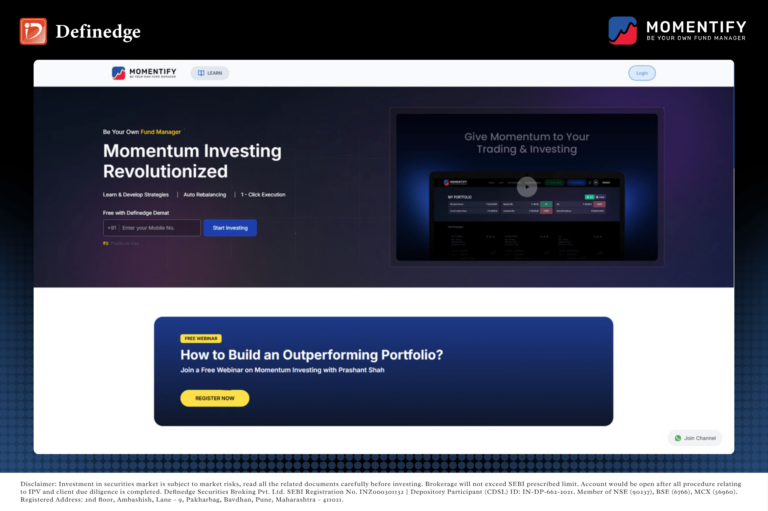
Unlock Momentify with Your Free Demat Account
This post is part of an ongoing series exploring momentum investing and trading – one concept at a time. Each blog builds on the previous one, so if you’re joining mid-way, it may help to go back and read the earlier parts.